You’ve probably heard a lot about Video Remote Interpretation (VRI). It’s a driving force for business success in modern times. But did you know that you can also ensure that deaf and hard of hearing individuals feel included in virtual meetings and events by using ASL video interpreting? What is ASL Video Interpreting? ASL interpretation […]
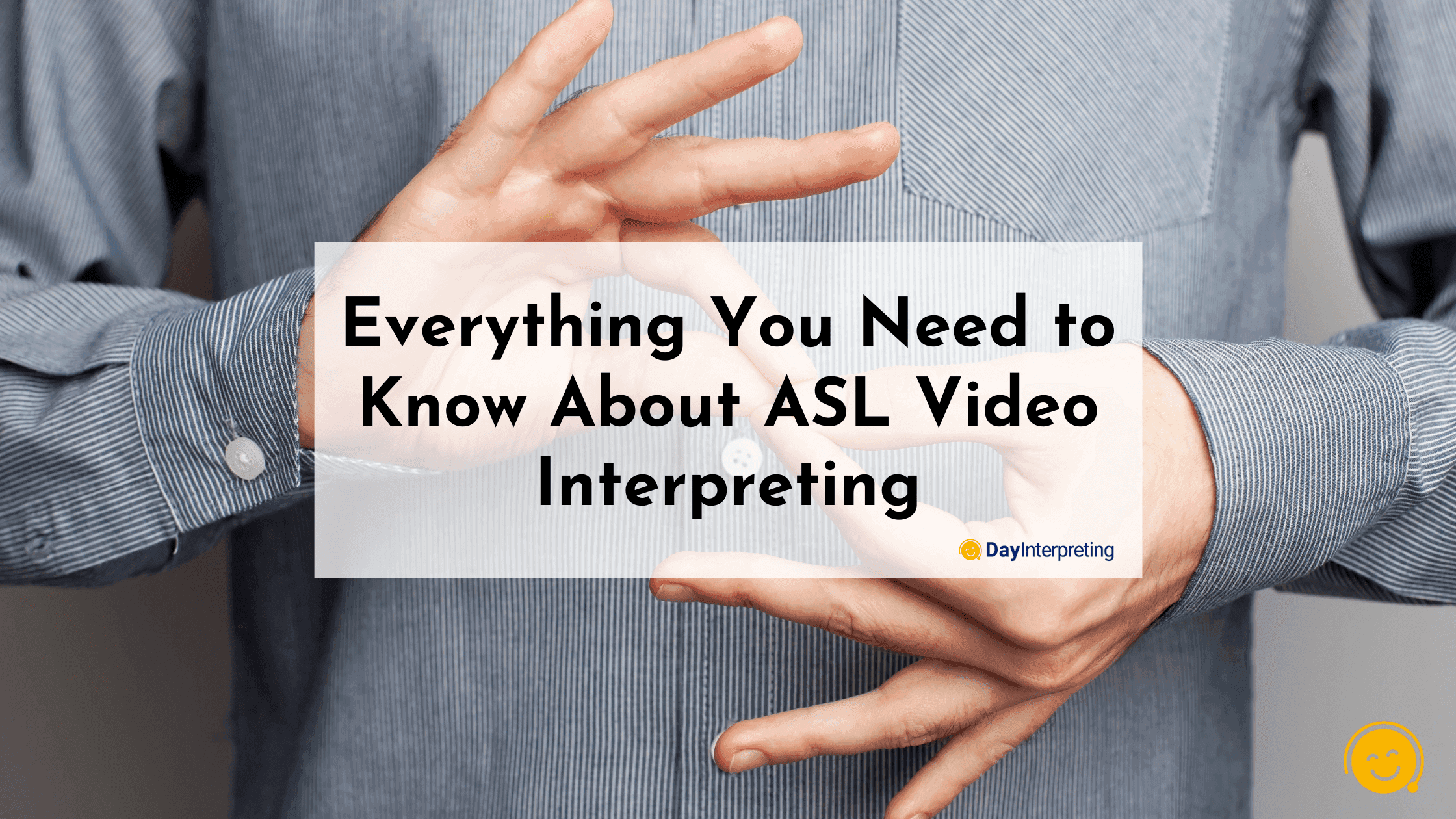
You’ve probably heard a lot about Video Remote Interpretation (VRI). It’s a driving force for business success in modern times. But did you know that you can also ensure that deaf and hard of hearing individuals feel included in virtual meetings and events by using ASL video interpreting?
ASL interpretation is one of the most prominent interpreting styles where interpreter’s interpreter between American Sign Language (ASL) and English (or any other target or source language). For the interpretation to be practical, ASL interpreters must be fluent in ASL as well as the target or source language.
Apart from being fluent in ASL, interpreters also need to know how to assess the communication preferences and language level of the people they’re interpreting for then adapt to meet those needs.
VRI works a lot like telephone interpreting, but it adds visuals to the interpreting process. Thanks to ASL Video Interpreting, deaf and hard of hearing individuals now have access to interpreting services that they wouldn’t have access to if they’d have to rely on any other remote interpreting service.
VRI allows for two-or-three-way calls. And since it enables the interpreter and audience to see body language, it enables the interpreter to address culturally sensitive issues and minimize the risk of misinterpretation.
Deaf and hard of hearing people that use sign language can use smartphones or webcams to communicate with others through a sign language interpreter. This is sometimes also referred to as Video Relay Service (VRS).
With ASL video interpreting, the interpreter (also called a Video Interpreter) communicates with the deaf person via sign language. They relay the information to the hearing person by speaking the message. The process is then reversed to allow the hearing person to talk to the deaf individual with the interpreter signing the information.
By nature, a visual presence is non-negotiable for ASL interpretation. But it’s not always possible to have in-person interpreters present in meetings, consultations, or conferences. ASL video interpreting is helpful in an array of industry sectors. Video interpreters are use in situations including, but not limited to, the following:
American Sign Language Video Interpreting can be scheduled or attained on demand, as and when needed. All you need to start is a high speed internet connection!
The need for interpreting services depends on your situation. Day Interpreting gives organizations the flexibility to access American Sign Language interpretation services when they need them. No fixed contracts, and no hidden costs. When on site interpreting services are not possible, VRI is the best option!
We serve the international community. Our qualified and highly experienced video interpreters are available for on-site, over-the-phone, and video remote interpreting. Our clients have instant access to interpreters any time they need them. Regardless of where they’re located or the industry they specialize in.

Seldean is a multi-skilled content wizard that dedicates herself to writing content that goes beyond merely sparking interest in the audience.

Written by
Seldean SmithSeldean is a multi-skilled content wizard that dedicates herself to writing content that goes beyond merely sparking interest in the audience.
Get the latest articles on interpreting and language access delivered straight to your inbox.


