In an increasingly interconnected world, the ability to communicate across language barriers has become a paramount necessity. Travel, business, and global collaboration depend on effective communication, and this often means bridging the gap between languages. Fortunately, technology has risen to meet this challenge with the development of wearable devices for real-time translation and interpretation. These […]
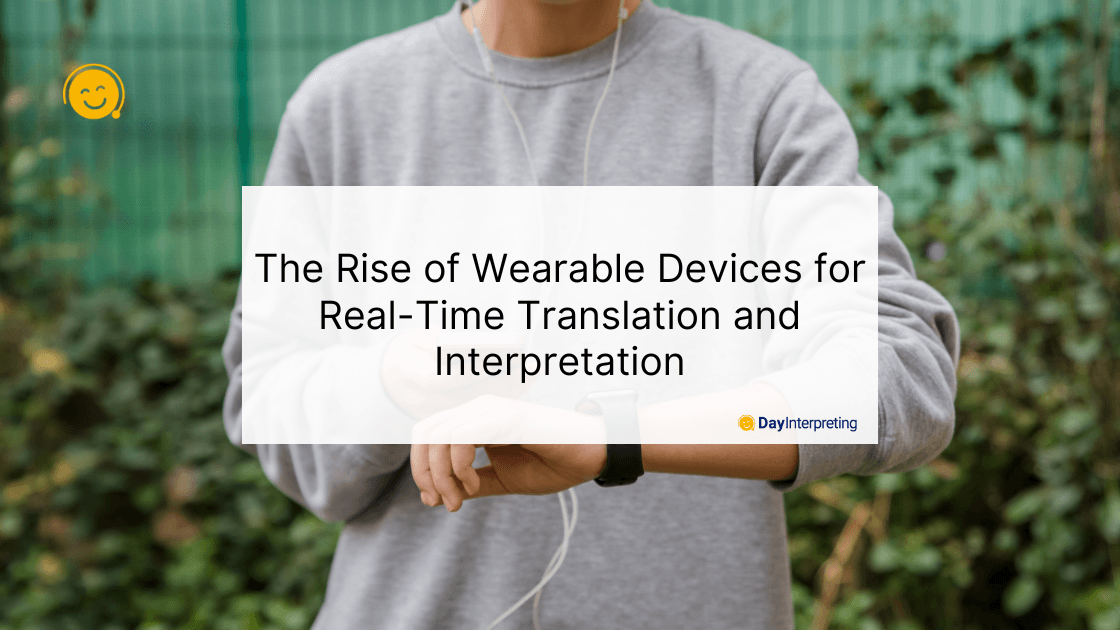
In an increasingly interconnected world, the ability to communicate across language barriers has become a paramount necessity. Travel, business, and global collaboration depend on effective communication, and this often means bridging the gap between languages. Fortunately, technology has risen to meet this challenge with the development of wearable devices for real-time translation and interpretation. These devices are not just making communication more accessible; they are fundamentally changing the way we interact with the world. In this article, we will delve into the fascinating evolution of these devices, exploring their inception, current state, and the potential they hold for the future.
The roots of real-time translation technology can be traced back to the mid-20th century when machine translation was in its infancy. Early attempts relied on rule-based systems that often produced awkward and inaccurate translations. It wasn’t until the advent of neural machine translation, driven by developments in artificial intelligence, that significant progress was made. This laid the foundation for wearable translation devices as we know them today.
One of the first notable breakthroughs was the introduction of smartphone apps that provided basic translation services. These apps utilized cloud-based machine learning models to translate text and speech, but they still had limitations, particularly in terms of real-time conversation.
The evolution from smartphone apps to dedicated wearable devices was a logical step in the quest for seamless real-time translation. These wearables, compact and unobtrusive, brought the promise of natural and fluid conversation across languages to life.
The hardware powering these devices has undergone significant improvements. Miniaturization and advancements in processing power have made it possible to integrate powerful AI algorithms into tiny, portable devices. These include specialized chips designed for machine learning tasks, ensuring efficient real-time processing.
The software running on these devices has also evolved. Neural networks and deep learning models have become the backbone of translation and interpretation algorithms. These models continuously learn from vast amounts of multilingual data, resulting in more accurate and context-aware translations.
The focus has shifted towards creating user-friendly interfaces that facilitate natural conversations. Wearable translation devices now offer features like noise cancellation, speech recognition, and context understanding, making communication smoother and more effective.
As of 2023, wearable translation devices have reached a level of sophistication that was once the stuff of science fiction. Leading brands have released products that offer an impressive array of features:
The evolution of wearable translation devices is far from over. The future promises even more exciting developments:
Wearable devices for real-time translation and interpretation have come a long way from their rudimentary beginnings. They have not only made international travel and business more accessible but have also bridged cultural divides and empowered individuals with new ways to connect. As technology continues to advance, the future of these devices holds the promise of even more seamless communication, further shrinking the world and bringing people together across language boundaries. In a world that grows ever more interconnected, the rise of wearable translation devices is truly a testament to the power of innovation and human ingenuity.

Seldean is a multi-skilled content wizard that dedicates herself to writing content that goes beyond merely sparking interest in the audience.

Written by
Seldean SmithSeldean is a multi-skilled content wizard that dedicates herself to writing content that goes beyond merely sparking interest in the audience.
Get the latest articles on interpreting and language access delivered straight to your inbox.


