


Category
Heritage language education refers to teaching languages that students grow up with (or have cultural ties to) but are not the dominant or “official” language for schooling. These are often the home or community languages of students whose families speak them, though structured instruction may be limited or inconsistent. Public schools, community programs, even weekend […]

Multilingual classrooms are no longer the exception, they’re the norm. Teachers around the world are finding themselves in front of students who speak two, three, or even more languages at home. Instead of asking students to leave those languages at the door, many educators are embracing translanguaging as a way to unlock learning. Translanguaging strategies […]
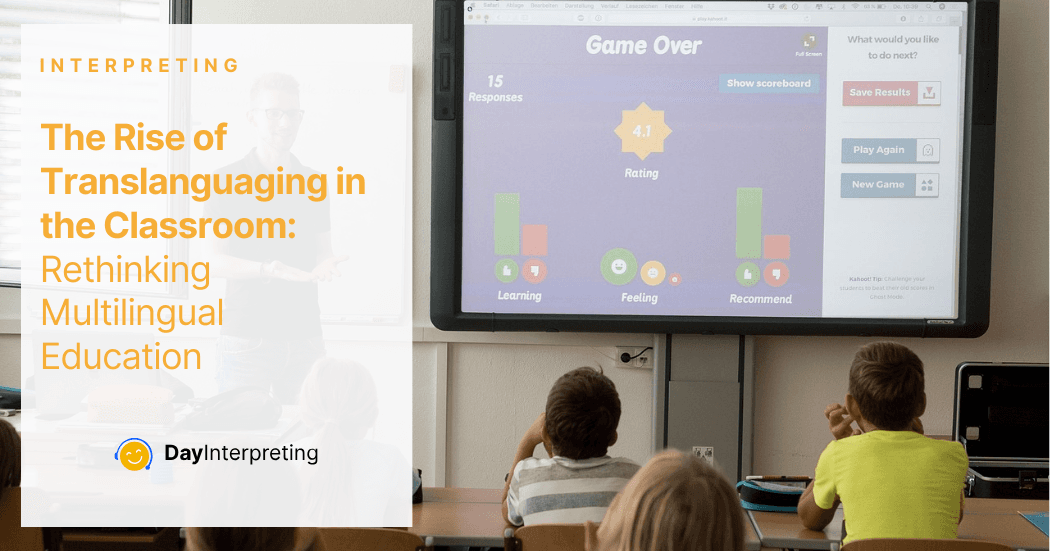
For decades, education in many countries followed a simple rule: one classroom, one language. If you were in an English-medium school, you spoke only English. If you were in a French school, you stuck to French. But in today’s multilingual world, this approach is shifting. Teachers, linguists, and policymakers are turning toward a concept called […]

Working as an interpreter is both rewarding and intensely demanding. In recent Reddit threads, interpreters across modalities, especially in sign language and video remote interpreting services (VRI/VRS), describe soaring levels of anxiety, vicarious trauma, and professional stress, exacerbated by political instability, social unrest, and the constant fear of job erosion. Interpreter well-being is a hot […]

Augmented Reality (AR) overlays digital content, like text, images, or animations, onto the real world through devices like smartphones, tablets, or AR glasses. You’ve probably seen it in action in apps like Pokémon GO or IKEA’s room visualizer. But in the world of language training, AR is becoming a game-changer. Why? Because language isn’t just […]
Think interpreting is all suits, courtrooms, and conference booths? Think again. The skills interpreters use every day—rapid thinking, cultural sensitivity, and multitasking— are exactly what gamers use when they’re dodging virtual bullets or unlocking puzzles in different worlds. The world of interpreting and video games have a surprising amount in common. As games become increasingly […]

Ever watched someone whisper into a microphone while wearing headphones, speaking a different language as someone else is talking? No, it’s not a spy operation; it’s simultaneous interpreting. Welcome to one of the most high-pressure, brain-busting, and mind-blowingly impressive jobs in the world of language. It’s like doing live voice-over for international diplomacy, and the […]

Every two weeks, somewhere in the world, a language dies. That’s not hyperbole, it’s a well-documented statistic from UNESCO. Of the approximately 7,000 languages spoken today, nearly half are considered endangered. We’re facing a serious issue with linguistic extinction! But when a language vanishes, it doesn’t just take a collection of words with it. It […]

Imagine describing the sky without using the word “blue.” For much of human history, that’s exactly what people did. They didn’t have color words. Ancient texts from cultures around the world, including Homer’s Odyssey, describe the sea as “wine-dark” and the sky with words like “grey,” “white,” or even “metallic.” This isn’t because they didn’t […]

Accents are more than just regional quirks; they’re living records of history, migration, and social change. Go back just a couple of hundred years, and English speakers on both sides of the Atlantic sounded surprisingly similar. It’s only over time that American and British accents drifted apart. But did you know that there are a […]

In a world that thrives on global connections, Latin America stands out as a region rich in opportunity and linguistic diversity. With more than 600 million people and over 400 languages spoken across the region, businesses hoping to expand, connect, or collaborate here need more than just Google Translate. They need Latin American interpreting service […]

Financial technology is immensely useful for a variety of reasons, and its application in a tax filing context deserves special attention. A particular advantage is that communicating with experts and representatives in other countries is much easier when the latest software tools are involved. Multilingual barriers are broken down, and compliance is easier to achieve. […]

